Dare to celebrate ‘The Before’

celebrate the before Strip down and take a good long look in the mirror. Your reflection is the photo-physical manifestation of every decision you’ve ever made, your unique genetic relationship with time and externals, and your current system state. Which is to say… this is you, now. This image is the fullness of your humanity expressed in a single quantization of time. Reject it, and you reject the entirety of your existence. Accept it with unrelenting compassion, and you – maybe for the first time – discover love.

But what use is philosophical intellectualization when your whole body wilts with shame at the mortification of having allowed your dimensions to start sliding off the bell curve of culturally indoctrinated hotness? Actually, you’d be surprised. But you’ve got to get down and dirty if you’re going win over your limbic mascot (your emotional brain) and get your whole system on board for celebrating and loving ‘The Before’.

My hallway mirror and I had been ships in the mist all fall and winter, so it was quite a surprise, come spring, to discover I was a honkin’ 30lbs heavier than my bikini ideal. Philosophy’s fun, sure, but damn it I’m a girl! I hardly recognized my own body; I had become a ‘Before’!! No one else to blame. Sure I’d been dealing with grief, and a winter that dragged me along with it to its bitter slushy end, but I was also digging deep into my humanity in an exploration of… Ya, ya, truth is I lasciviously maxed out my glamours and insatiables in an unrestrained orgy of debauchery, mostly while wearing extremely unrestraining track pants – hence my surprise.

“Oh shit,” I said, looking down, “this is not good, not good at all.”

I happen to be one of those lucky bitches who gets off on broccoli and hiking, so losing weight wasn’t my biggest concern. But I really didn’t want to feel like shit for the next few months while I whittled myself back down to my ideal system state proportions. Solution? Push the boundaries of permission (introduced last post).

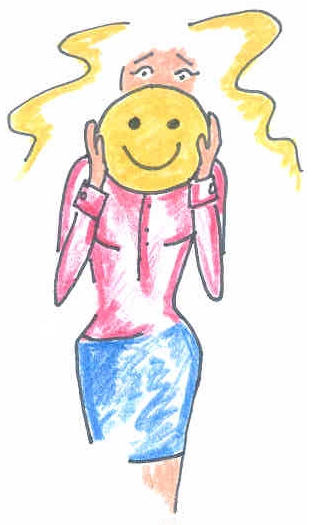
warning signI’m not kidding about down and dirty! OK, first up, permission to experience gratuitous joy in sensory context of body, connecting experience of body with ebullient brain state. Homework: new morning routine of dancing naked to fave tunes in celebration of being a woman who peaks her pleasures with total abandon. Hell ya! Next, take fun (strategically flattering!) ‘before’ pic that is a celebration in itself (see pic – pssst missing letter is M). Note: I know I look ironically, infuriatingly skinny in mine – one word people… ANGLES! Rework wardrobe to accept and accentuate new curves to improve aesthetic and social feedback. Done, and done.

But we’ve got to get our primitive brains primed if we want a true visceral change in perspective. I had to somehow seduce Mitch-the-insatiable-itch. Dressed as full-on Christina Hendricks from Mad Men sexy buxom secretary, I “took my new tits out on the town” – objectively ignoring anyone who was ignoring me and replaying any and all ogling to imprint it in my memory. I also made sure to engage in some very strategic boob-centric flirtations – figured hubby wouldn’t mind since it was all in the name of ‘research’ ~wink.

The internet will give you precedent of permission for almost anything. Thus, I discovered ‘gainers’ and the men who love them. Google if you dare! Defining the extremes can help you find your place in between. Nerd that I am, I made notes. I paid close attention to the specific language the women used when talking about their bodies and expressing their fantasies. I also made note of the luxurious, sometimes surprising, ways their men touched/fondled/caressed different areas.

Permission to celebrate ‘The Before’ must come from within, so once again I left my own man on the sidelines so I could take permission into um… er… my own hands. All for brain science! Now, without getting too TMI here, I can only say this: training a new glamour by incorporating the gainer language, visualizations, and tactile techniques into my own experience made for an… um… ‘transformative’ eventcelebration hat – the first time, the second, the… But I’m afraid my brain training may have worked a little too well. I’m actually sitting here thrilling in my own cleavage. So why am I still bothering to lose the weight? Find out in an upcoming post!

Take advantage of your brain’s secret superpower

permissionAs children, we sought it outside of ourselves, challenged its boundaries, and submitted our viable worlds to be ordered according to its precedent. What is it? Permission. But we’re not little kids any more. In Blank Canvas Living’s exploration of learning to live with the brain, not for the brain, personalizing our permissions is one of our most powerful cognitive conceptual tools.

What is permission? Permission is a biological event. Let’s think about the brain. Without getting too technical here, permission can be loosely defined as the activation of neural pathways through the release of neurotransmitters in response to a stimulus. OK, now that that’s out of the way…

Permissions build our physical, emotional, moral, and social realities. We learn the boundaries and expectations of our viable worlds through external permissions (verbal, non-verbal) which are internally translated into supporting circuitry. This is a lifelong process, but most concentrated during childhood, before the brain starts pruning back unnecessary conceptual flexibilities. Example: A mother patiently teaches her child that dogs are brown and grass is green while cozying up together over a colouring book. A darling scene, sure, but equally grotesque in its neurological ramifications – the loss of our virginity of perception. Shedding a little tear here… sniffle.

super brainSo how is permission a superpower? This is going to blow your mind… ZOOM POW SPLAT! A paralysed woman in a wheelchair in British Colombia scores highest on a national happiness survey. Everyday she wakes up with a brain flooded with neurotransmitters that colour her reality full of hope and possibility. Why? She has permission (remember the biology!). An Oxford philosophy honours student hangs herself after a bad breakup. Why? Her depression gave her neurological permission to live, and ultimately die, in a threatening and hopeless world. When used as a cognitive conceptual tool, permission can offer a glimpse into different realities. And once that door is open, you can step inside.

How to play with your permissions to personalize your viable world:

1- Evaluate your current permissions. This might surprise you. Example: You take a drink after work to relax. Yes, your brain is asking for an external, because that’s where it’s learned the Pavlov progression starts, but did you know you get a dopamine surge even before ingestion? Your brain is, essentially, already giving you full permission to enter a relaxed system state and live in a warm, fuzzy, blameless world. It’s only the mechanism (the glamour) for getting there that’s in question.

2- What world would best suit your genetic self? What permissions would that world give to someone living in it? What permissions would that person give themselves? What permissions would be damaging? Examples: Permission to be accountable to others in order to live in a world where others are accountable to us. Permission to indulge in loving, gentle self-talk in order to live in a world where we have value and safety.

3- Once you define a permission you’d like to adopt for yourself, you’ve got to ask the big question: what is the precedent for this permission? Are there people out there right now living with this permission? Are they successfully achieving their personal goals? Are they mentally healthy and happy? How do their viable worlds differ from my own? Example: Since the paralysed woman in the wheelchair has full permission to be happy, why the hell should your loaded inbox give you permission to be miserable? Seriously, think about it.

So before you light your next cigarette, accept that this is only the mechanism (the current glamour), and that your brain is already giving you permission to leave your desk and take 7 minutes of pure indulgent escape. F*ck the cigarette! Own those 7 minutes of bliss within your own body. Take a breath – clean, pure. Be fully, apologetically, your own permission.

Overcome a taste aversion in 5 simple steps

taste aversionA taste aversion is your brain being an overprotective parent. Sure, it has your best interests in mind, but that’s not much of a consolation when you’re the only one at the party who can’t binge on the olive dip or tequila jello shooters. From an evolutionary perspective, developing an aversion to a food or drink connected with (how do I put a this delicately?) a post-ingestion ‘indelicacy’, makes good biological sense. But sometimes this mechanism overcompensates and we’re left missing out on all the fun.

It was a magical night… The newlywed couple, deeply in love and deeply stoned, gazed dreamily into each other’s bloodshot eyes over a greasy vinyl tablecloth at Ottawa’s Shawarma Palace. Yes, magical, until the foolish bride munchied her way through an entire soup bowl sized slurry of ridiculously potent garlic dipping sauce, plus garlic potatoes and garlicky chicken shawarma! Thus, began the nightmare… CLICK HERE (if you dare). Don’t do drugs, kids – just don’t.

evil garlic bulbYes, dear readers, that dear sweet not-so-innocent girl was yours truly. For almost ten years post-trauma I managed to live quite contentedly off the garlic grid. Everything was peachy until the owners of my office building’s downstairs cafe changed and the ventilation system started pumping nauseating garlic fumes directly into my workspace through the overhead vent!

“Really?” I said, looking up at the ceiling – and possibly a little higher to find someone to blame for this cruel twist of fate. “REALLY?!”

No escape, no more excuses. I could either quit my job or somehow trick my brain into loving that little demon bulb again. Because I tell ya, time sure wasn’t doing the trick! And after spending years researching the brain, I knew exactly how to set about it…

The proof is in pudding, or in this case, the garlic chicken n’ sweet potato curry (pictured above) I ate for supper last night… and today’s breakfast… and lunch… CLICK HERE FOR RECIPE

How to overcome a taste aversion in 5 simple steps:

1- Find the origin story of your taste aversion and accept it with unrelenting compassion. This will give you permission to rationally refute your emotional/sensory bias, which will give you a good start. But like most cognitive behaviour therapy (CBT), reconceptualization without more direct communication with your subconscious is a whole lotta pain for oftentimes marginal gain.

2- Observe your reflexive responses and replace them with new body behaviours. I noticed that whenever I was watching the Food Network, and the host would say, “and now add the garlic,” my face – no joke – would seize into textbook disgust. I consciously began anticipating garlic and greeting its stage entrance with a wilful smile. Felt like an idiot, sure, but only until the new reflex became automatic (which happened surprisingly quickly).

3- Visualize, visualize, visualize! This is big one. Start with visualizing (using all your senses!) other people enjoying your food or alcohol taste aversion. Fill the scene with as many positive emotional and sensory associations as possible. I used a warm, happy Italian family having a Sunday supper in a rustic Tuscan kitchen (stereotypes are great here because they come pre-loaded with helpful associations). Project yourself into the scene. Then, when you’re ready, visualize yourself enjoying the food in question on your own terms, in your own setting. Note: practice visualizations in Theta brain wave state for maximum effectiveness, when you’re dozing off or groggily waking up.

4- Practice a kinder, gentler version of exposure therapy. Sure Vogue food writer Jeffery Steingarten was able to fake it till he made it with his taste aversions, but why torture yourself? Develop your new intimacy slowly and strategically. Personalize new recipes and really play with this new ingredient. I chose a particularly non-threatening, dare-I-say ‘cute’ garlic bulb to get me started. Invite the food into a kitchen (and bedroom – wish I was joking) that’s loaded with positive associations, good music, mood, and/or company. Keep your mind and senses in the present moment to prevent memory from hijacking control. And don’t pressure yourself. First dates don’t dictate relationships – I would know!

5- Take your power back and watch your words! I was playing a dangerous game above when I referred to garlic as “that little demon bulb.” Words have incredibly powerful associations, so be careful which words you use when talking about your loosening aversion – especially to yourself. This is going to sound painfully Oprah-esque, but… appreciate where you are in your journey (Ow! it hurts to even type that!). Don’t lie to yourself by saying, “Ooooo I love ______,” when it pops up on the menu, but be honest and take that moment to reflect on your successful experiments and how you’re so proud of yourself for working at taking back your personal power over your taste aversion. Which is to say, take these opportunities to consciously congratulate yourself for learning to work with your brain and not be bullied by it!

Update: Using the above method, I’ve now cured my taste aversion to olives too! Finally, I can take the Mediterranean off my no-fly-zone list – watch out Greece, here comes Cymbria!

How to start merging your efficiencies with your indulgences

naked dancingI dressed up to flash the window washer this morning. Just another day at the office. Life is short – don’t make it short on fun! Just go for it! Play with your food, your clothes, and, in between snooze alarms… your wonderful self!

fast and easy summer salad recipes 3

“Sure,” you say, “but I have to do such n’ such, then yada yada, then…” Bet you’ve got a mile long list of efficiencies that ‘need’ to taken care of before you can drift off into your indulgences and escape to your Secret Garden. Bullshit!

Once you accept the simple truth that your brain will only let you do what you want to do and that there is no ‘have to’, you win back your freedom to play – anytime, anywhere. Our brains trick us into compartmentalization and hypervigilance. And, by natural extension, our culture promotes this fallacy. Our extended systems (community, culture) tend to reflect and exaggerate our internal functioning. Example: primal fear of starving has linked itself, full force, to the fear of not answering your boss’s email fast enough – connected in your brain to getting fired and not being able to afford food. But what might feel logical, even temptingly  intuitive, can trap you in unrealistically stressful beliefs and encourage extreme compensations like addiction, cheating, and obesity.

Why don't we tie it all together?Western culture’s ever widening gap between perceived efficiencies and indulgences has become crippling to our mental, physical, and spiritual health. But we don’t have to be slaves to outwardly imposed glamours. Let’s tie our wants and needs closer together! (in this case with a darling little bow) Trust your senses, not your preconceptions. Take your system boundary back down to the surface of your skin. What does commuting ‘feel’ like? Be honest. Probably just like sitting on the couch watching your fave program. Relax into it, why the hell not? We have choice. Don’t let so many millennia of evolution go to waste! We each have a prefrontal cortex that’s just begging to be allowed to reprogram our Viable Worlds.

Turn off CNN’s perma-coverage of flight 370 for a second. We are blessed to live in a glorious age of concealer and condoms, grocery stores and glasses. Big spoiler alert… You’re gonna die. So what? Really, so what. Depending on where you place your system boundary, this small detail can be of either infinite importance or infinite unimportance. Re-quantize your relationship with time (details in upcoming posts). I know, I know, the concept takes neuroplasticity and self-acceptance to their very limits, but if I can learn to do it anyone can! Slowly, after concentrated practice in attention control, every breath you take (in… out…) becomes a lifetime lived in full. Why not make each the most honest, complete life you possibly can?

shower sexTake inspiration from Japanese ryokans: “As my food is being prepared for me, I’m being prepared for my food.” – Anthony Bourdain. Use this sort of priming and splash yourself with cold water before stepping into the best shower of your life. Story your dishes… why not? Turn your salads into personalized sensory symphonies by following the example of Naples pizza makers: “Almost a poetry to it.” – Heston Blumenthal (because apparently I get all my wisdom from TV chefs lol). Shitty morning? Accept your emotion with unrelenting compassion and work it through your body with a snooze alarm interpretive dance that embraces the unabashed horror and agony of the moment. Just go for it!

Exercise in Engagement: Roll up a sleeve. Bury your nose in the warm, soft – possibly furry – inside of your elbow. Take a long deep breath of your scent. This is a new intimacy. This small area of skin is all your own. Give it a little lick. Its smell, taste, and texture are the physical manifestation of every decision you, your parents, your parents’ parents ever made. This is time. This is life. This is you. Love this moment and be transformed into your own, delightfully portable, indulgence.

Is your ‘Secret Garden’ secretly killing you?

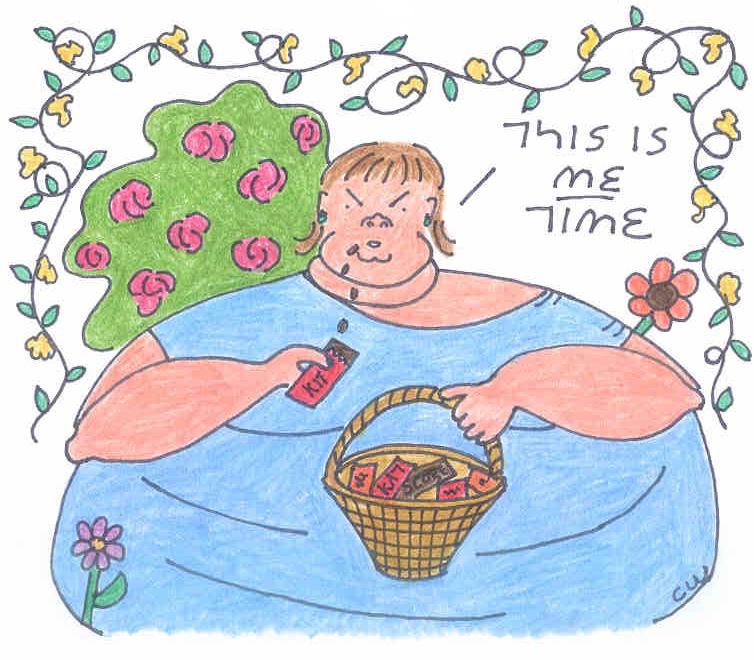
fat woman eatingSo many of us live double lives. I don’t just mean having a young filly or a well hung, obedient boy toy shacked up across town. I’m talking about your Secret Garden. You know, the private place you escape to when the world gets too loud and needy or we reach a Tetris tipping point. We all have our own version of ‘Me Time’, but often what begins as a safe sanctuary slowly de-evolves into a dangerous, even lethal, prison. One day you look up and the walls of your Secret Garden are too high to climb and you’re trapped as a slave to your glamours, insatiables, and be-all-end-alls.

Feeling all high and mighty watching a Youtube obesity documentary while picking at a plate of asparagus on my lunch break, I was suddenly blindsided by an embarrassing parallel. The woman on screen had bustled her kids off to school, tidied up, put in a load of laundry, and then – efficiencies done – took a plastic grocery bag full of chocolate bars out of a hidden cupboard and proceeded to devour the entire gluttonous mess in a highly ritualized performance.

“This is ME-TIME,” she declared to the camera, almost as a threat. Woe-betide the fool who would dare try and rob her of this one true, loyal pleasure!

“Oh shit,” I said to myself, “do I really do the same freakin’ thing?!”

Of course, just like most of us, but my Secret Garden involved getting drunk and stoned watching old online episodes of Antiques Roadshow on a tiny netbook in my kichen while sitting on one of those horribly uncomfortable 1970s plywood stacking chairs. Grim. But how had this happened? I was in love, full of potential, with all joints as yet in working order. How had this sad, rather tragic scene become my be-all-end-all?

Genetics and circumstances dictate our unique set of personal glamours, insatiables, and be-all-end-alls. These behaviours and externals are what we feel make our lives worth living. Some lucky bastards are coded to respond to running and quinoa, while others get off on fries or affairs. Stress, biochemistry, and trauma can make the brain more vulnerable to adopting extreme, often dangerous, glamours (eg: cutting and drugs) because these behaviours provide an immediate and seductively efficient neurotransmitter reaction. Tolerance develops over time and before you know it you’re either 500 pounds or base jumping!

Just like yours, my Secret Garden had been planted with all innocence – just like the one in Burnett’s classic children’s novel (a personal fave!). I made my own clothes and acted out heroic stories in the backyard – happy as a clam! Then life happened and somehow I ended up on that stupid hard-ass chair!

Be honest. What does your Secret Garden grow? Because whatever you think you want, whatever you think your dreams and goals may be… here’s the truth: your unconscious, primative mind is, at this very moment, concentrating all its energy and effort on the simple goal of getting you into that garden and keeping you there.

But we’re not children anymore. Once we acknowledge our current glamours, insatiables, and be-all-end-alls, and accept them with unrelenting compassion, we can begin to pre-train new ones and eventually switch over more permanently. Click here to read about how the relationship between your efficiencies and indulgences can help reveal (and even begin training!) new personal glamours.

A politically incorrect rant against collaboration

office orgyAre two heads better than one? How about three? Or five hundred? Almost everything we touch, taste, see, hear, and even smell, is a product of multiple minds meeting in the middle. We live in a globalized culture of collaboration… a world of compromise. At all stages, from concept to marketplace, any new idea must survive countless negotiations and push backs. Logic and personality are our best weapons when battling for an innovation, but both are subjective and eat up substantial time and energy – along with team building, group brainstorming, meetings… meetings… AAAAAAAARG!

We can’t escape collaboration. Heck, conception is the ultimate collaboration and none of us would be here without that! But we’ve got to take a break from the office orgies! We’ve lost touch with the private, primitive urge to create independently – just for the hell of it. Social media and globalization have linked value to multiplicity – whether in ‘Likes’ received, dollars earned, or people converted. But stop. Just stop. Stop letting other people design your world.

With such an overwhelming breadth of new products and creative productions coming at us 24/7, we’re becoming desensitized to individual acts of self-expression, especially our own! But how do we resist the seductive fact that collaboration naturally produces idealized forms – Plato would be so pleased! We now need trainers, masseuses, uniform designers… to score a single hockey goal. A piece of clothing is nothing until it’s dressed up by models, makeup artists, photographers, and airbrushers. This progression to idealization is, of course, perfectly natural and predictable from a neurological standpoint. But why be a slave to your brain when it guts the value of your uniquely imperfect humanity?

We’re a competitive species, for resources, mates, and ego actualization. But how do we compete, head to head, with 7 billion people! Go back 30 000 years… one man… a dozen shells… one necklace. His personal tribal contribution was sacred and precious. Every moment he spent on the task reinforced his own value to himself and to his tribe. Does working a shit job to afford a Louis Vuitton purse really provide the same validation? Why do you think one is never enough? Look how fast our purchases become our insatiables. This is what happens when we lose connection with our individual ability to express our humanity as tangible sensory creations. But there’s hope. Let’s collaborate across time, not in time. Take the gift of the tools (farming, technology, etc.) designed by minds who have come before us, and start small…

Exercise in Engagement: Bring the system boundary back down to the surface of your skin, breathe, then stretch it out to the volume of your kitchen – nothing and no one else exists. You must be your own validation in this moment. Forage for ingredients and dare to build the most personal sandwich possible with what you find. Doesn’t have to be perfect, healthy, or follow any Food Network rules. Screw Plato! Explore the experience of this sandwich with each one of your senses, one at a time, then all together in a moment of total engagement. This sandwich is you because you made it without compromise or negotiation and because (not to be too graphic here) it will literally become you in a matter of hours. Now go forth and conquer!

How to tackle life’s Tetris tipping points

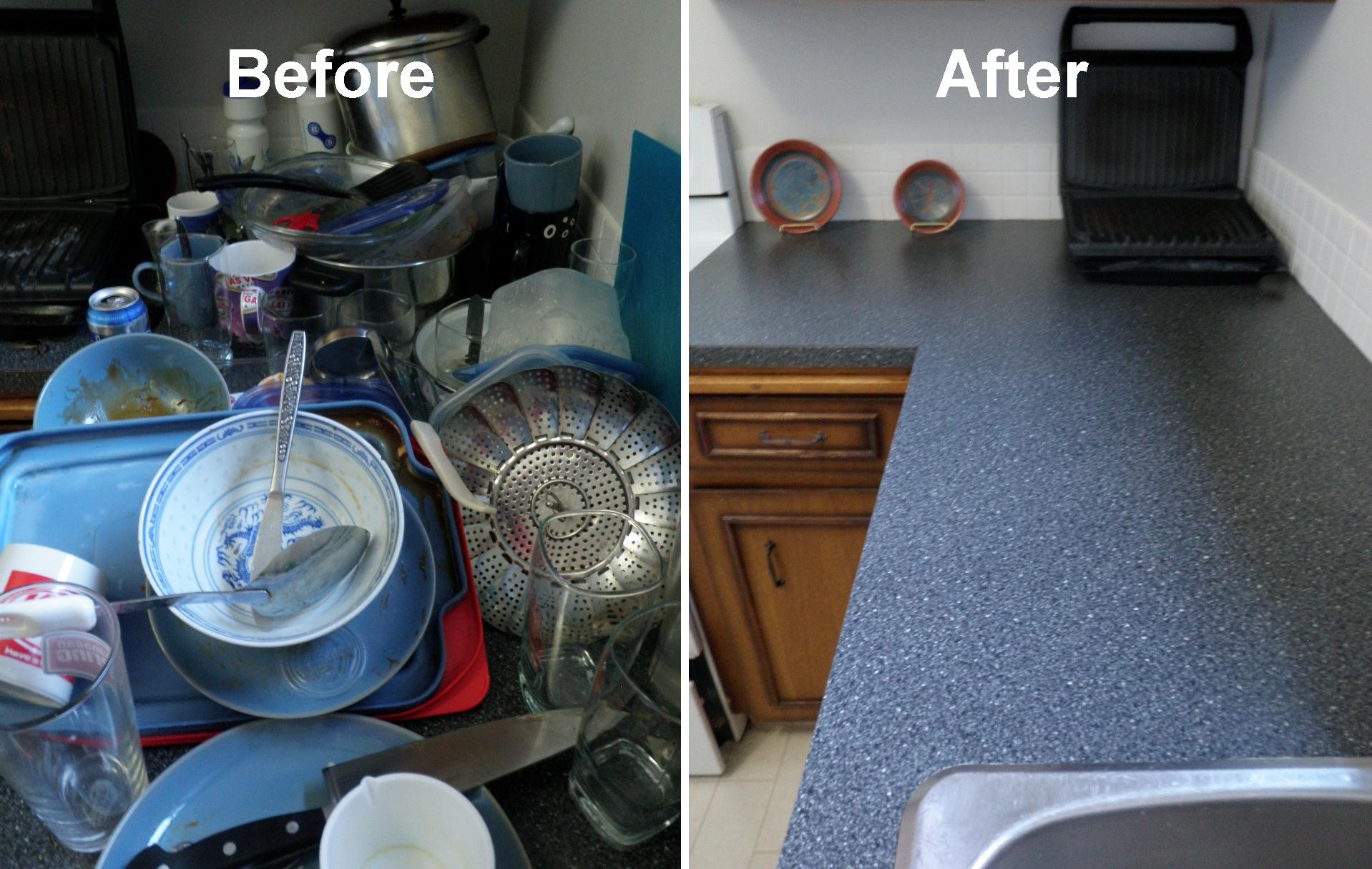
kitchen before and afterWhat’s a Tetris tipping point? You’re in the zone, everything’s stacking up perfectly – eating healthy, bills paid, emails answered, legs shaved (and/or face and/or whatever else)… When suddenly, life hurls one of those stupid wonky 4 square zig-zags at you and you try to fit it in, but everything’s happening too fast and now there’s a gap. Still, you’re sure you can recover, but the 4 square vertical you were counting on never comes, and no matter how fast you try to anticipate and react, you can’t keep up. All you can do is watch helplessly as chaos closes in and… GAME OVER.

tetrisAs we move up the levels of life in age, career, and responsibility, new stressors come at us faster and faster – just like in Tetris. Sure, you can practice and plan, but inevitably, if you’re human (and if you’re not, well, I’m sure you have other issues) you’ll face that GAME OVER screen again and again. Your perfect plan will go straight out the window because life, just like love, is unpredictable and overwhelming. And we wouldn’t want it any other way!

So, how do we tackle life’s Tetris tipping points? With unrelenting compassion. I suck at housework, always have, and probably always will. I have other skills and talents that can be quite useful around the home (just ask my husband), but dirty dishes will always be my nemesis. I’ll stay on top of things for days (occasionally even weeks) at a time, but then, for any number of reasons, the stack gets past a certain height and I just can’t deal and it just keeps piling up and… GAME OVER.

I’ve laid prostrate on the kitchen floor weeping at my ineptitude. I’ve rocked out to hard-core blues in bra and panties. I’ve dressed up like an Eastern European slave girl. I’ve turned the task into an archeological dig and you can be sure I always try to pawn those dishes off on dear ol’ hubby. And yes, in times of utter desperation, I’ve even resorted to buying paper plates and plastic cutlery. I’ve also, as you can see by these links, apparently blogged about doing the dishes more often than actually doing them!

But something changed the day I accepted the beautifully human truth that I, Cymbria, am a woman utterly overwhelmed by doing the dishes. And that that’s OK. With unrelenting compassion, I released my guilt and shame – so often the source of our procrastination. It was a simple act, but one with profound and wonderful consequences.

Now when I face the scourge, I do it with humour, literally and figuratively. I crank up the comedy station on the radio, wear a scullery maid head scarf to get into character, and take my time. I still loath the task, but it no longer lurks as a constant ugly nag – threatening my self-worth – in the back of my mind. When I’m doing the dishes I’m doing the dishes, when I’m not, they’re simply not part of my Viable World.

If you’re facing a Tetris tipping point today, step back and take a breath. Maybe something happened and you couldn’t keep up… and that’s OK. You’ve been here before; you’ve failed, and you’ve survived. You might have to go back a few levels, but that’ll just give you more practice for the next round. You’re still you – and you’re still marvelously human.

Note: I let it slip in a cross-country conversation with my mother that I was posting a pic of my most recent kitchen nightmare. She was horrified. “Oh, you can’t do that!” she said. “You know how people label.” Well, dear readers, label away. All I can say is… my kingdom for a dishwasher!!   

Introduction to pragmatic system state theory

systems theory philosophy diagramPragmatic system state theory is a conceptual model of the human experience that integrates general systems theory and pragmatism to produce a framework for practical therapeutic application…

wait…WAIT! I can’t do this. I can’t write this. There’s too much pressure. How the hell am I supposed to fit years worth of thought experiments into a single blog post? But I can’t weasel out… not when I’ve promised a paradigm shift. You’ll begin to feel it as I’ve felt it… or I’ll fail… epically. No escape. Prefrontal cortex shutting down… everything is panic…torture to think… losing my words… mind paralyzed, body fidgety, sweating, fighting to flee this one awful clawing question of how do I write this when words only tell us what we already know?

An idea. Not new, but seen through a different lens and a different language. I am alone, yet I am everything and everyone. I am the least and the most important expression of our universe. My time is infinite, yet quantized to the space of a single breath. In… Out… Each cycle a life lived in full.

Concept One: Our universe is expressed through time as a system – a set of elements that form a whole – whose boundary can be drawn at any expansion beyond a single point. From micro to macro, our nested human system can be subdivided by our human consciousness from single cell all the way out to the edge of our individual viable worlds. Common patterns, energy transformations, and feedback loops can be observed as consistencies throughout the whole.

Concept Two: Regardless of where our own system boundary is drawn by our consciousness, each enclosed element can be conceptualized as having equal, infinite importance to the definition of the human experience during a single quantization of time. All outside elements become environmental concerns. Since all possible boundary descriptions coexist through time, all system elements within our universe possess, concurrently, both infinite and insignificant value to the human experience.

Concept Three: When this conscious system boundary positioning is exercised to increase its flexibility, the brain (mind/personality) trades in its seat as master to become equal in importance to all other system elements in the human experience. If we value our own unique existence, the conceptual conclusion of this equality is unrelenting compassion for all elements forming the total universal system.

Concept Four: Accepting this equality of value allows an individual human to consciously engage with his/her system elements (including the brain’s concept of self) with unrelenting compassion and the freedom to assign importance/influence, ranging from infinite to insignificant, according to the choice of system boundary position. This concept eliminates the cognitive dissonance arising from the conflict between our yearning for universal unity (bliss) and our need to assert our individual importance (ego). What was once a struggle becomes a conscious dance between equally valuable expressions of the human experience.

Concept Five: Pragmatic system state theory is concerned with the development of practical exercises and tools for increasing our system boundary flexibility and negotiating our personal system states – where system state is defined as the communal interactions of a set of equally valued elements within a described boundary during a specific quantization of time.

As with any branch of pragmatism, ‘the proof is in the pudding’. Words are just words until they change the way engage with our humanity. A selection of Blank Canvas Living’s upcoming posts will highlight the remarkable therapeutic possibilities of pragmatic system state theory (taking full advantage of current neuroscience and neuroplasticity) in the fields of addiction, mood disorders, relationships, weight loss, productivity… and that’s just the beginning. But for now, perhaps the best argument for this conceptual model is how quickly and efficiently it helped me shift my own system state so I could get my shit together and write this blog post!

The horrifying truth about happiness

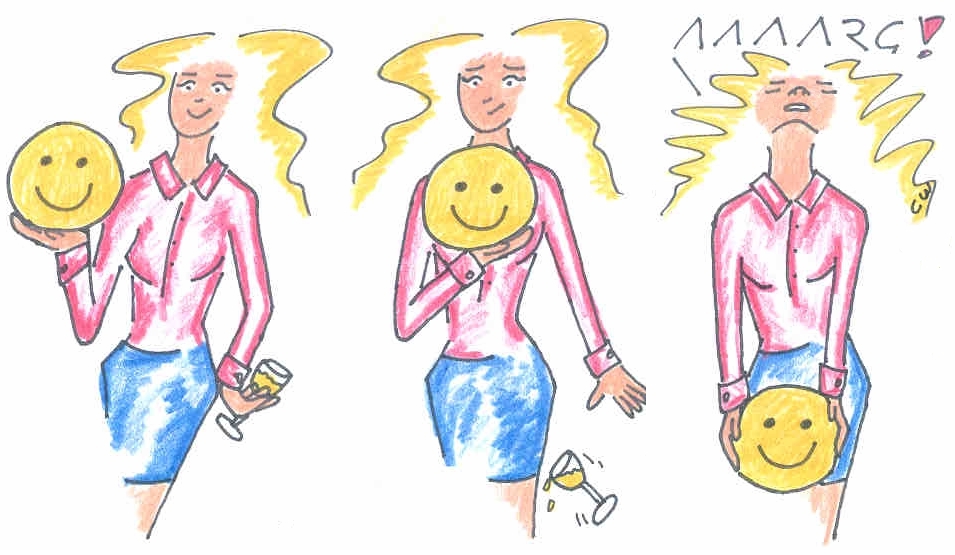
smiley face cartoonEver been wrong? I don’t mean “oops” wrong, but completely, horribly, soul scorchingly WRONG? If logic loops and paradoxes are sure signs of a stale paradigm, what happens when our current model for the understanding and pursuit of happiness stumbles headlong into both? Well, dear readers, as you’ll discover below, the answer is anything but pretty…

smiley face When you read any recent scientific article/paper/post about happiness, a common link shines through. Whether describing hedonistic (drugs, alcohol, the ingestion or wearing of whipped cream) or eudonic (volunteering, goal meeting, exercising talents) rewards, there’s always the same sentence squeezed in somewhere: “… causes certain chemicals to be released in the brain.” AHA! Doesn’t take a rocket scientist to put two and two together. The conclusion is obvious: happiness is a function of neurotransmitters (dopamine, serotonin, oxytocin, etc.). So logically, everything we do, from pouring ourselves a glass of wine after work, gunning for that promotion, taking SSRIs for depression, getting a pineal gland buzz from meditation, to tying ourselves up in faux-fur, is done in dedicated service to that one magical organ – the brain – and its darling little chemical messengers.

Why do people ‘get off’ on different things? Depending on our genetics and environment, we learn to respond to (and thereby pursue) a unique set of glamours, insatiables, and be-all-end-alls. Innate personal activation energy thresholds and social/cultural vulnerabilities help determine whether we end up junkies, or well-coiffed queens of the PTA. Simple enough… or so it seemed until I, young, naive, and as intellectually masochistic as Newton probing behind his own eyeball, decided to test this theory on myself.

Logic loop: If happiness is a modulation of our neurotransmitter levels, and the brain is wired for efficiency, why are all these idiots jogging when they can be…

Within a surprisingly short amount of time I found myself too fat for anything but my Viking man’s track pants, lying spread-eagle with a bad back on a candy wrapper covered carpet, watching reality TV reruns while doped up on a nauseating (not to mention dangerous!) cocktail of alcohol, muscle relaxants, Gravol, painkillers, and – just for good measure – marijuana. Happy? Not so much. Solution? I figured all I had to do was switch my primary goal to longevity, rather than happiness, and train myself on a compatible new set of glamours and insatiables. Since I was already living in a Viable World without heroin (I had to draw the line somewhere!), couldn’t I just exclude my problem glamours from my viable world?

Paradox 1: If food is one of my insatiables, and there can be no viable world without food, how do I escape the efficiency logic loop that led directly to the track pants?

Paradox 2: In a world where there are people who fear public speaking more than death, how can a prefrontal cortex goal of longevity overcome eons of limbic evolution and enforce the pursuit of less than maximum-by-the-moment happiness?

What’s the horrifying truth about happiness? It’s that so many of us have gotten it all WRONG! Solution? Full mind/body/spirit paradigm change. F*ck neurotransmitters! Let’s explore how to live with the brain, not for the brain! Curious? Let me introduce you to systems theory’s naughty little kid sister: Pragmatic System State Theory.