Overcome a taste aversion in 5 simple steps

taste aversionA taste aversion is your brain being an overprotective parent. Sure, it has your best interests in mind, but that’s not much of a consolation when you’re the only one at the party who can’t binge on the olive dip or tequila jello shooters. From an evolutionary perspective, developing an aversion to a food or drink connected with (how do I put a this delicately?) a post-ingestion ‘indelicacy’, makes good biological sense. But sometimes this mechanism overcompensates and we’re left missing out on all the fun.

It was a magical night… The newlywed couple, deeply in love and deeply stoned, gazed dreamily into each other’s bloodshot eyes over a greasy vinyl tablecloth at Ottawa’s Shawarma Palace. Yes, magical, until the foolish bride munchied her way through an entire soup bowl sized slurry of ridiculously potent garlic dipping sauce, plus garlic potatoes and garlicky chicken shawarma! Thus, began the nightmare… CLICK HERE (if you dare). Don’t do drugs, kids – just don’t.

evil garlic bulbYes, dear readers, that dear sweet not-so-innocent girl was yours truly. For almost ten years post-trauma I managed to live quite contentedly off the garlic grid. Everything was peachy until the owners of my office building’s downstairs cafe changed and the ventilation system started pumping nauseating garlic fumes directly into my workspace through the overhead vent!

“Really?” I said, looking up at the ceiling – and possibly a little higher to find someone to blame for this cruel twist of fate. “REALLY?!”

No escape, no more excuses. I could either quit my job or somehow trick my brain into loving that little demon bulb again. Because I tell ya, time sure wasn’t doing the trick! And after spending years researching the brain, I knew exactly how to set about it…

The proof is in pudding, or in this case, the garlic chicken n’ sweet potato curry (pictured above) I ate for supper last night… and today’s breakfast… and lunch… CLICK HERE FOR RECIPE

How to overcome a taste aversion in 5 simple steps:

1- Find the origin story of your taste aversion and accept it with unrelenting compassion. This will give you permission to rationally refute your emotional/sensory bias, which will give you a good start. But like most cognitive behaviour therapy (CBT), reconceptualization without more direct communication with your subconscious is a whole lotta pain for oftentimes marginal gain.

2- Observe your reflexive responses and replace them with new body behaviours. I noticed that whenever I was watching the Food Network, and the host would say, “and now add the garlic,” my face – no joke – would seize into textbook disgust. I consciously began anticipating garlic and greeting its stage entrance with a wilful smile. Felt like an idiot, sure, but only until the new reflex became automatic (which happened surprisingly quickly).

3- Visualize, visualize, visualize! This is big one. Start with visualizing (using all your senses!) other people enjoying your food or alcohol taste aversion. Fill the scene with as many positive emotional and sensory associations as possible. I used a warm, happy Italian family having a Sunday supper in a rustic Tuscan kitchen (stereotypes are great here because they come pre-loaded with helpful associations). Project yourself into the scene. Then, when you’re ready, visualize yourself enjoying the food in question on your own terms, in your own setting. Note: practice visualizations in Theta brain wave state for maximum effectiveness, when you’re dozing off or groggily waking up.

4- Practice a kinder, gentler version of exposure therapy. Sure Vogue food writer Jeffery Steingarten was able to fake it till he made it with his taste aversions, but why torture yourself? Develop your new intimacy slowly and strategically. Personalize new recipes and really play with this new ingredient. I chose a particularly non-threatening, dare-I-say ‘cute’ garlic bulb to get me started. Invite the food into a kitchen (and bedroom – wish I was joking) that’s loaded with positive associations, good music, mood, and/or company. Keep your mind and senses in the present moment to prevent memory from hijacking control. And don’t pressure yourself. First dates don’t dictate relationships – I would know!

5- Take your power back and watch your words! I was playing a dangerous game above when I referred to garlic as “that little demon bulb.” Words have incredibly powerful associations, so be careful which words you use when talking about your loosening aversion – especially to yourself. This is going to sound painfully Oprah-esque, but… appreciate where you are in your journey (Ow! it hurts to even type that!). Don’t lie to yourself by saying, “Ooooo I love ______,” when it pops up on the menu, but be honest and take that moment to reflect on your successful experiments and how you’re so proud of yourself for working at taking back your personal power over your taste aversion. Which is to say, take these opportunities to consciously congratulate yourself for learning to work with your brain and not be bullied by it!

Update: Using the above method, I’ve now cured my taste aversion to olives too! Finally, I can take the Mediterranean off my no-fly-zone list – watch out Greece, here comes Cymbria!

How to start merging your efficiencies with your indulgences

naked dancingI dressed up to flash the window washer this morning. Just another day at the office. Life is short – don’t make it short on fun! Just go for it! Play with your food, your clothes, and, in between snooze alarms… your wonderful self!

fast and easy summer salad recipes 3

“Sure,” you say, “but I have to do such n’ such, then yada yada, then…” Bet you’ve got a mile long list of efficiencies that ‘need’ to taken care of before you can drift off into your indulgences and escape to your Secret Garden. Bullshit!

Once you accept the simple truth that your brain will only let you do what you want to do and that there is no ‘have to’, you win back your freedom to play – anytime, anywhere. Our brains trick us into compartmentalization and hypervigilance. And, by natural extension, our culture promotes this fallacy. Our extended systems (community, culture) tend to reflect and exaggerate our internal functioning. Example: primal fear of starving has linked itself, full force, to the fear of not answering your boss’s email fast enough – connected in your brain to getting fired and not being able to afford food. But what might feel logical, even temptingly  intuitive, can trap you in unrealistically stressful beliefs and encourage extreme compensations like addiction, cheating, and obesity.

Why don't we tie it all together?Western culture’s ever widening gap between perceived efficiencies and indulgences has become crippling to our mental, physical, and spiritual health. But we don’t have to be slaves to outwardly imposed glamours. Let’s tie our wants and needs closer together! (in this case with a darling little bow) Trust your senses, not your preconceptions. Take your system boundary back down to the surface of your skin. What does commuting ‘feel’ like? Be honest. Probably just like sitting on the couch watching your fave program. Relax into it, why the hell not? We have choice. Don’t let so many millennia of evolution go to waste! We each have a prefrontal cortex that’s just begging to be allowed to reprogram our Viable Worlds.

Turn off CNN’s perma-coverage of flight 370 for a second. We are blessed to live in a glorious age of concealer and condoms, grocery stores and glasses. Big spoiler alert… You’re gonna die. So what? Really, so what. Depending on where you place your system boundary, this small detail can be of either infinite importance or infinite unimportance. Re-quantize your relationship with time (details in upcoming posts). I know, I know, the concept takes neuroplasticity and self-acceptance to their very limits, but if I can learn to do it anyone can! Slowly, after concentrated practice in attention control, every breath you take (in… out…) becomes a lifetime lived in full. Why not make each the most honest, complete life you possibly can?

shower sexTake inspiration from Japanese ryokans: “As my food is being prepared for me, I’m being prepared for my food.” – Anthony Bourdain. Use this sort of priming and splash yourself with cold water before stepping into the best shower of your life. Story your dishes… why not? Turn your salads into personalized sensory symphonies by following the example of Naples pizza makers: “Almost a poetry to it.” – Heston Blumenthal (because apparently I get all my wisdom from TV chefs lol). Shitty morning? Accept your emotion with unrelenting compassion and work it through your body with a snooze alarm interpretive dance that embraces the unabashed horror and agony of the moment. Just go for it!

Exercise in Engagement: Roll up a sleeve. Bury your nose in the warm, soft – possibly furry – inside of your elbow. Take a long deep breath of your scent. This is a new intimacy. This small area of skin is all your own. Give it a little lick. Its smell, taste, and texture are the physical manifestation of every decision you, your parents, your parents’ parents ever made. This is time. This is life. This is you. Love this moment and be transformed into your own, delightfully portable, indulgence.

How to tackle life’s Tetris tipping points

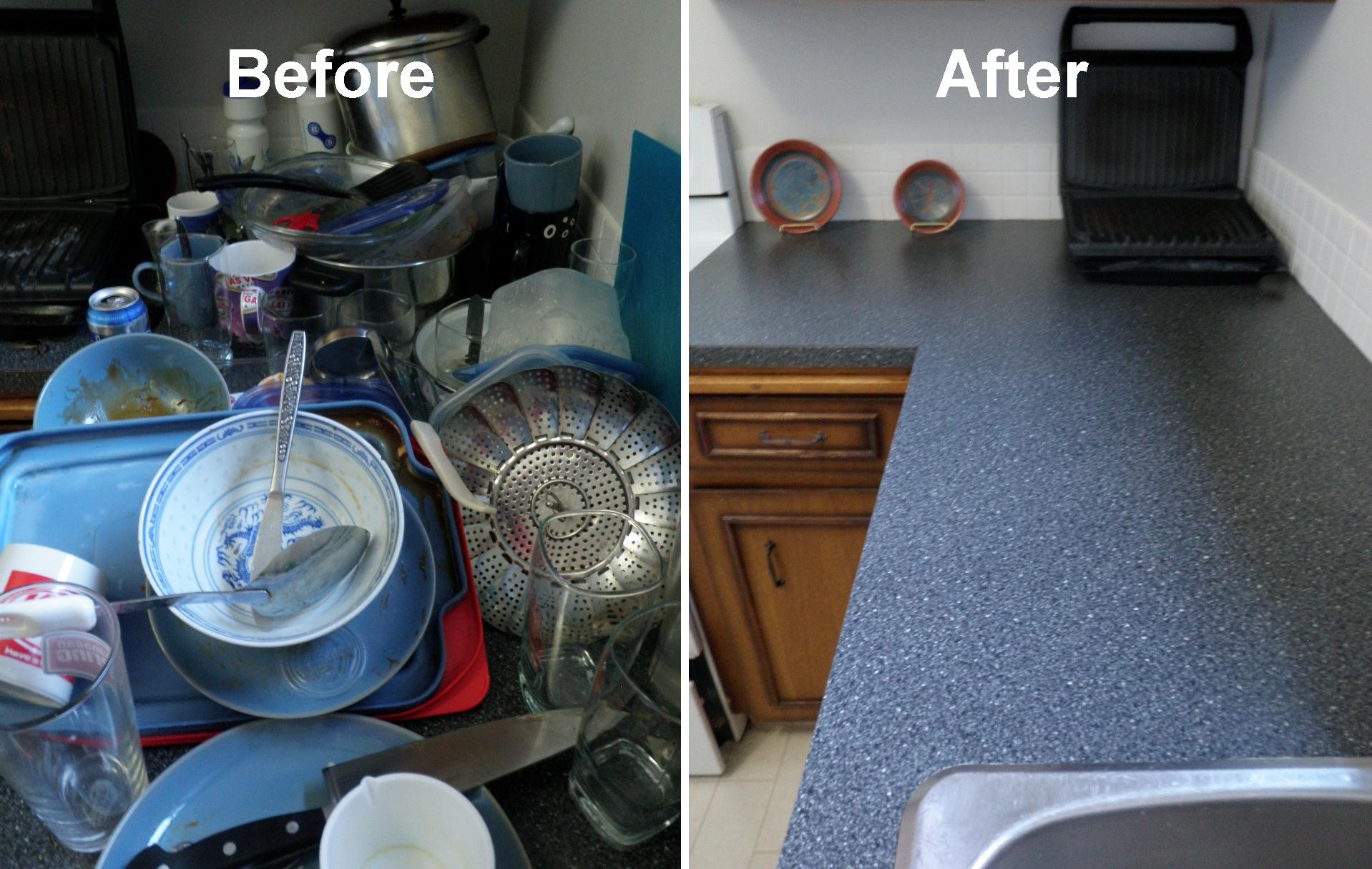
kitchen before and afterWhat’s a Tetris tipping point? You’re in the zone, everything’s stacking up perfectly – eating healthy, bills paid, emails answered, legs shaved (and/or face and/or whatever else)… When suddenly, life hurls one of those stupid wonky 4 square zig-zags at you and you try to fit it in, but everything’s happening too fast and now there’s a gap. Still, you’re sure you can recover, but the 4 square vertical you were counting on never comes, and no matter how fast you try to anticipate and react, you can’t keep up. All you can do is watch helplessly as chaos closes in and… GAME OVER.

tetrisAs we move up the levels of life in age, career, and responsibility, new stressors come at us faster and faster – just like in Tetris. Sure, you can practice and plan, but inevitably, if you’re human (and if you’re not, well, I’m sure you have other issues) you’ll face that GAME OVER screen again and again. Your perfect plan will go straight out the window because life, just like love, is unpredictable and overwhelming. And we wouldn’t want it any other way!

So, how do we tackle life’s Tetris tipping points? With unrelenting compassion. I suck at housework, always have, and probably always will. I have other skills and talents that can be quite useful around the home (just ask my husband), but dirty dishes will always be my nemesis. I’ll stay on top of things for days (occasionally even weeks) at a time, but then, for any number of reasons, the stack gets past a certain height and I just can’t deal and it just keeps piling up and… GAME OVER.

I’ve laid prostrate on the kitchen floor weeping at my ineptitude. I’ve rocked out to hard-core blues in bra and panties. I’ve dressed up like an Eastern European slave girl. I’ve turned the task into an archeological dig and you can be sure I always try to pawn those dishes off on dear ol’ hubby. And yes, in times of utter desperation, I’ve even resorted to buying paper plates and plastic cutlery. I’ve also, as you can see by these links, apparently blogged about doing the dishes more often than actually doing them!

But something changed the day I accepted the beautifully human truth that I, Cymbria, am a woman utterly overwhelmed by doing the dishes. And that that’s OK. With unrelenting compassion, I released my guilt and shame – so often the source of our procrastination. It was a simple act, but one with profound and wonderful consequences.

Now when I face the scourge, I do it with humour, literally and figuratively. I crank up the comedy station on the radio, wear a scullery maid head scarf to get into character, and take my time. I still loath the task, but it no longer lurks as a constant ugly nag – threatening my self-worth – in the back of my mind. When I’m doing the dishes I’m doing the dishes, when I’m not, they’re simply not part of my Viable World.

If you’re facing a Tetris tipping point today, step back and take a breath. Maybe something happened and you couldn’t keep up… and that’s OK. You’ve been here before; you’ve failed, and you’ve survived. You might have to go back a few levels, but that’ll just give you more practice for the next round. You’re still you – and you’re still marvelously human.

Note: I let it slip in a cross-country conversation with my mother that I was posting a pic of my most recent kitchen nightmare. She was horrified. “Oh, you can’t do that!” she said. “You know how people label.” Well, dear readers, label away. All I can say is… my kingdom for a dishwasher!!   

Introduction to pragmatic system state theory

systems theory philosophy diagramPragmatic system state theory is a conceptual model of the human experience that integrates general systems theory and pragmatism to produce a framework for practical therapeutic application…

wait…WAIT! I can’t do this. I can’t write this. There’s too much pressure. How the hell am I supposed to fit years worth of thought experiments into a single blog post? But I can’t weasel out… not when I’ve promised a paradigm shift. You’ll begin to feel it as I’ve felt it… or I’ll fail… epically. No escape. Prefrontal cortex shutting down… everything is panic…torture to think… losing my words… mind paralyzed, body fidgety, sweating, fighting to flee this one awful clawing question of how do I write this when words only tell us what we already know?

An idea. Not new, but seen through a different lens and a different language. I am alone, yet I am everything and everyone. I am the least and the most important expression of our universe. My time is infinite, yet quantized to the space of a single breath. In… Out… Each cycle a life lived in full.

Concept One: Our universe is expressed through time as a system – a set of elements that form a whole – whose boundary can be drawn at any expansion beyond a single point. From micro to macro, our nested human system can be subdivided by our human consciousness from single cell all the way out to the edge of our individual viable worlds. Common patterns, energy transformations, and feedback loops can be observed as consistencies throughout the whole.

Concept Two: Regardless of where our own system boundary is drawn by our consciousness, each enclosed element can be conceptualized as having equal, infinite importance to the definition of the human experience during a single quantization of time. All outside elements become environmental concerns. Since all possible boundary descriptions coexist through time, all system elements within our universe possess, concurrently, both infinite and insignificant value to the human experience.

Concept Three: When this conscious system boundary positioning is exercised to increase its flexibility, the brain (mind/personality) trades in its seat as master to become equal in importance to all other system elements in the human experience. If we value our own unique existence, the conceptual conclusion of this equality is unrelenting compassion for all elements forming the total universal system.

Concept Four: Accepting this equality of value allows an individual human to consciously engage with his/her system elements (including the brain’s concept of self) with unrelenting compassion and the freedom to assign importance/influence, ranging from infinite to insignificant, according to the choice of system boundary position. This concept eliminates the cognitive dissonance arising from the conflict between our yearning for universal unity (bliss) and our need to assert our individual importance (ego). What was once a struggle becomes a conscious dance between equally valuable expressions of the human experience.

Concept Five: Pragmatic system state theory is concerned with the development of practical exercises and tools for increasing our system boundary flexibility and negotiating our personal system states – where system state is defined as the communal interactions of a set of equally valued elements within a described boundary during a specific quantization of time.

As with any branch of pragmatism, ‘the proof is in the pudding’. Words are just words until they change the way engage with our humanity. A selection of Blank Canvas Living’s upcoming posts will highlight the remarkable therapeutic possibilities of pragmatic system state theory (taking full advantage of current neuroscience and neuroplasticity) in the fields of addiction, mood disorders, relationships, weight loss, productivity… and that’s just the beginning. But for now, perhaps the best argument for this conceptual model is how quickly and efficiently it helped me shift my own system state so I could get my shit together and write this blog post!

The horrifying truth about happiness

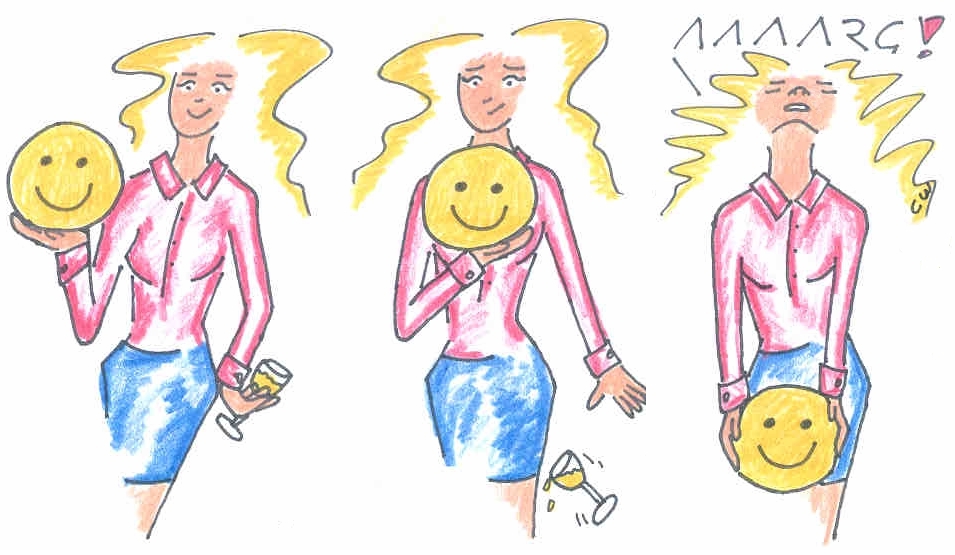
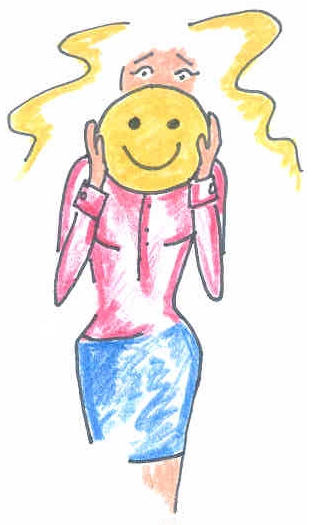
smiley face cartoonEver been wrong? I don’t mean “oops” wrong, but completely, horribly, soul scorchingly WRONG? If logic loops and paradoxes are sure signs of a stale paradigm, what happens when our current model for the understanding and pursuit of happiness stumbles headlong into both? Well, dear readers, as you’ll discover below, the answer is anything but pretty…

smiley face When you read any recent scientific article/paper/post about happiness, a common link shines through. Whether describing hedonistic (drugs, alcohol, the ingestion or wearing of whipped cream) or eudonic (volunteering, goal meeting, exercising talents) rewards, there’s always the same sentence squeezed in somewhere: “… causes certain chemicals to be released in the brain.” AHA! Doesn’t take a rocket scientist to put two and two together. The conclusion is obvious: happiness is a function of neurotransmitters (dopamine, serotonin, oxytocin, etc.). So logically, everything we do, from pouring ourselves a glass of wine after work, gunning for that promotion, taking SSRIs for depression, getting a pineal gland buzz from meditation, to tying ourselves up in faux-fur, is done in dedicated service to that one magical organ – the brain – and its darling little chemical messengers.

Why do people ‘get off’ on different things? Depending on our genetics and environment, we learn to respond to (and thereby pursue) a unique set of glamours, insatiables, and be-all-end-alls. Innate personal activation energy thresholds and social/cultural vulnerabilities help determine whether we end up junkies, or well-coiffed queens of the PTA. Simple enough… or so it seemed until I, young, naive, and as intellectually masochistic as Newton probing behind his own eyeball, decided to test this theory on myself.

Logic loop: If happiness is a modulation of our neurotransmitter levels, and the brain is wired for efficiency, why are all these idiots jogging when they can be…

Within a surprisingly short amount of time I found myself too fat for anything but my Viking man’s track pants, lying spread-eagle with a bad back on a candy wrapper covered carpet, watching reality TV reruns while doped up on a nauseating (not to mention dangerous!) cocktail of alcohol, muscle relaxants, Gravol, painkillers, and – just for good measure – marijuana. Happy? Not so much. Solution? I figured all I had to do was switch my primary goal to longevity, rather than happiness, and train myself on a compatible new set of glamours and insatiables. Since I was already living in a Viable World without heroin (I had to draw the line somewhere!), couldn’t I just exclude my problem glamours from my viable world?

Paradox 1: If food is one of my insatiables, and there can be no viable world without food, how do I escape the efficiency logic loop that led directly to the track pants?

Paradox 2: In a world where there are people who fear public speaking more than death, how can a prefrontal cortex goal of longevity overcome eons of limbic evolution and enforce the pursuit of less than maximum-by-the-moment happiness?

What’s the horrifying truth about happiness? It’s that so many of us have gotten it all WRONG! Solution? Full mind/body/spirit paradigm change. F*ck neurotransmitters! Let’s explore how to live with the brain, not for the brain! Curious? Let me introduce you to systems theory’s naughty little kid sister: Pragmatic System State Theory.

Charisma, intimacy, and the one night stand handshake

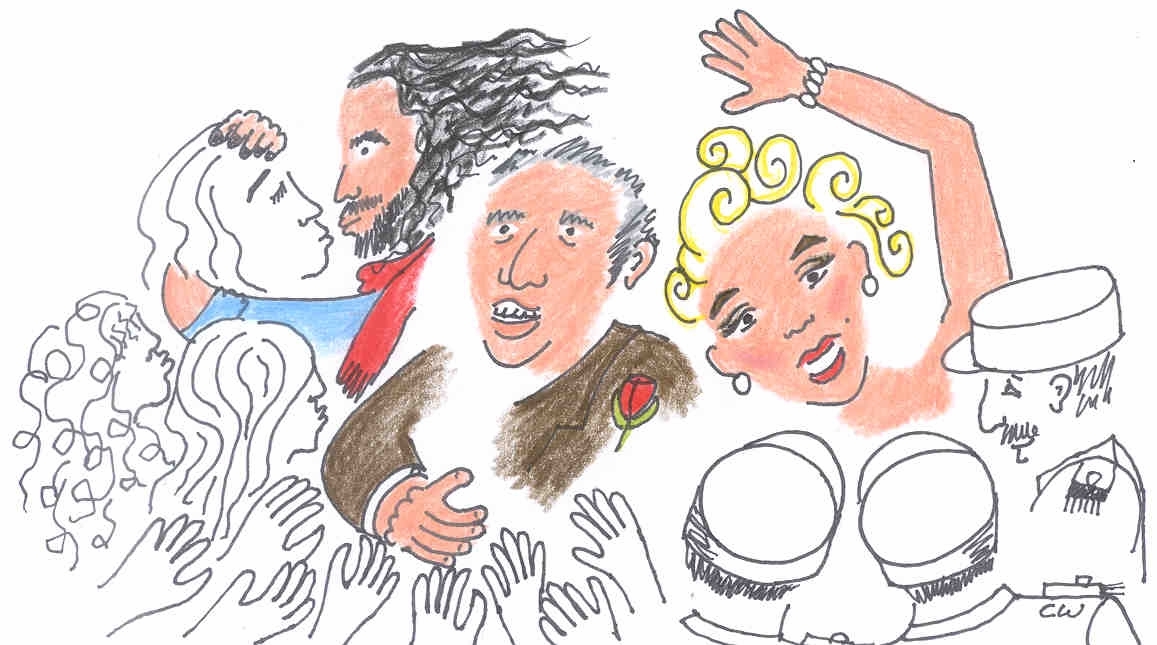
charismatic historical figuresI love you. Can you see it in my eyes? Can you feel it in my handshake? I am completely yours. We are each other’s fascination. But only for this moment… There are so many articles and books written about “how to learn to be charismatic.” You know the drill: eye contact, total attention, body language angles, clear purpose, get your target talking about themselves, etc. Since the brain is coded to assign meaning to situational symbols, using the symbols of love and devotion can be particularly effective, and dangerous.

But the charismatic’s instant intimacy is too easy. Russell Brand’s flirtations seduce, then abandon. Politicians (in this case Canada’s own Pierre Elliot Trudeau) take advantage of their one night stand handshakes. But, like Norma Jean riding the subway incognito then stepping onto the platform and, with only a hair toss and a wiggle, becoming Marilyn Monroe, it’s just too darn easy.

Sure, I’ve played the game. I went from a shy teenager fretting about where to look in high school hallways to a twenty-something who loved going out dancing by herself – in baggy jeans and sneakers! – and would own the floor. Of course the long blonde hair helped (and still does), but there were always hotter chicks with bigger boobs teetering around the club. Total confidence was the key, knowing that even when I made a complete ass of myself (which sometimes people let me get away with, and sometimes decidedly not) I would always forgive myself and plow fearlessly, joyously, even if oftentimes a little sheepishly, into the next song.

Classically, charisma is a genetic trait, but unique in that it can also be a learned skill. Both sources can lead to its being purposed for good or evil. How do we differentiate between the Mother Teresas and the Charles Mansons? But the more pertinent question is how do we prevent ourselves from being seduced by the charismatics who may be sincerely curious and caring, but whose one night stand involvement in our lives can spin our worlds into chaos.

True intimacy is earned intimacy, and that takes time. What also takes time to foster, grow, and mature is the adult version of total confidence: unrelenting compassion, directed both inwards and outwards. It can only come when you’ve found your place in the universe and are brave enough to accept it fully, and with gratitude. Charisma then comes from a deeper, timeless source and the original definition of the word takes hold – whatever your faith or system of beliefs. People will be drawn to you because you’ll have found a center, one that pulls in other worlds with a gravity all its own.

Negotiate your humanity using a limbic mascot

fun vice cartoonWe all have a Mitch-the-insatiable-itch. Yours may have a different name, or set of genitalia, but we all need a way to negotiate with our brain’s limbic system – our emotional selves. Science has found that our prefrontal cortex, our ‘rational’ brain, is second in command to our limbic system. Our conscious selves are gatekeepers ever struggling to hold back the dopamine wielding forces of our emotionally charged motivations and temptations. Brain scans can reveal a decision up to 7 seconds before you consciously decide! Of course, this shouldn’t come as any surprise to those of us who have ever sat down, rolled up our sleeves, and inhaled an entire pizza. Either we were so wasted we’d already locked out our prefrontals, or we were actually able to rationalize this act of symphonic gluttony. Scary thought either way! And for those of us who have never adopted a rigid set of internal regulations (hello anyone creative, oh, and anyone madly in love), we so often sabotage ourselves by being able to effortlessly ‘rationalize’ the most absurd glamours, insatiables, and be-all-end-alls.

Desperate times call for desperate measures. When the Calgary Flames are down 5-1 in the third, and Harvey the Hound is still dancing manically in the stands, drumming up a rallying cry from the crowd… sometimes a mascot is our last best hope for survival. A limbic mascot is a visual thinking tool that can be used to help create a subtle separation, a space for negotiation, between our emotions and our intellectual reasoning. To ensure we stay faithful to our long term goals, we often (hourly unless you’re one of the lucky ones) need to challenge the urgency and importance of short term impulses that are demanding (and I do mean demanding) attention and satiation. A limbic mascot can serve as an entity of attribution that allows you to make these conscious intellectual challenges without directly attacking your ego.

Mitch-the-insatiable-itch is my limbic system middle-man. He’s ever-present in Blank Canvas Living’s sidebar, and he’s even snuck his way into one or two posts. The petulant little darling is all belly and cute pink package. Go ahead and read in a light dose of Freudian penis envy – but they really are such fun. He has a perpetual indignant frown and fingers for pointing at what he wants, but no real mouth. He leaves all the verbalization, rationalization, and justification to the prefrontal side of the equation. He’s a master of the ever-so-seductive myth of “this is the last time.” I love the little guy, even though his ear horns mean he’s rarely sitting on the angel side of my shoulder.

I’m so curious, dear readers, what would your limbic system mascot look like?

Viable Worlds Theory – Why philosophy is more than mental masturbation

socrates greek philosopher cartoonThe successful survival of our species has always depended on pattern prediction. We model our brains and our behaviours on the patterns we experience and adopt as truth. We then fit new information into these existing structures that dictate our interpretations and attentions. The following three basic patterns found throughout nature easily illustrate this precept:

1) Sequences – From ’rounding the bases’ while dating to predicting the sequence of seasons/weather for agriculture
2) Branched Hierarchies – From attention priority scales (eg: run from wasp – run screaming from bee) to societal/job roles
3) Networks – From understanding our interaction within ecosystems to Richard Branson’s business success

Countless patterns, many coded within our own bodies, can be translated from micro through to macro: torus energy fields, gravity, the golden mean, crystallography… etc. How many humans have devoted their lives to finding the ‘one governing pattern behind everything’? Although this one-ring-to-rule-them-all search is undoubtedly a noble, and most exquisitely human, cause (and who am I to say it can’t be done!), I propose we lay out on the grass with Socrates and take a bit of a breather.

Socrates had the balls to confess his truth, that “all I know is that I know nothing.” In his classical world, full of proportions and ethical theorizing, this was a tantalizingly provocative admission. But in our globalized, overly connected, overly rationalized, universe, we can’t all just wander around in loosely draped robes getting into philosophical debates with handsome younger, and powerful older, men – although I’ve pretty much just described my idea of heaven. We have to be a tad more, dare I say, pragmatic about things. Yes, James and Kierkegaard were on the right track, but I propose we push their philosophies even further…

The Viable Worlds Theory

First of all, we need the scientific method to adapt to the 21st century. It was all fine and good for the Enlightenment, and even for Kant’s obsessive categorizing. But truisms are so, like, pre-Edwardian. Wake up people! Even fashion’s gone individual! We need to drop the attention directing ‘hypothesis’, and demand ‘conclusion statements’ that include multiple interpretations of the data set. Let’s pass our results around to different faculties, post them on social media for public interpretation, and get correlation perspectives from a wide variety of personal paradigms.

But how do we function, let alone thrive, in a world of such unfathomable complexity? How can we have faith in faith when we accept the validity of all? Do we have to put ourselves through the strictest asceticism, like Gautama Buddha and Martin Luther, before we reach enlightenment? Or get all uppity like, and I type this with utmost respect, Muhammad and Confucius? Just relax, I’ve got good news for you. You’re already living in your own viable world.

Whether you define your core as your pineal gland, your sub or straight-up conscious mind, or the surface of your skin, your individual viable world (your personal paradigm) extends outwards through (as many as you believe exist) dimensions from this point all the way to the edge of the universe – wherever you understand that edge to be. This is your reality, and all your patterns, values, and decisions will be guided by this framework. As unromantic as it may sound, every human is essentially living in their own world. I believe we have an intuitive sense of this principle – just look at the language we use: “living in his own little world”, “welcome to my world”, “it was like stepping into another world.” I’m not going to go all Chomsky on you and insist that language is in itself a philosophical proof, but the lingo is undoubtedly interesting.

Just as so many genes in your DNA can be switched on or off, so to can you negotiate with your viable world. The success of any system, from skin cell to Wall Street, is directly proportional to its ability to regenerate, adapt, and accommodate. These three factors are your go-to checklist for evaluating the personalization of your own viable world. Slow healing/regeneration = change your diet. New boss at work = adapt your priority scale. Just married a writer = accommodate or die. Let’s not forget that we are a social and inherently ambitious species. By comparing our world with the worlds (as expressed and experienced) around us, we can alter our own to best serve our purposes and fulfill the full potential of our preciously unique genetic code.

People who are depressed live in a bleak, unforgiving world because their internal landscape has become bleak and unforgiving. People suffering from cleanliness OCD are, quite literally, living in a world with more germs than the rest of us. All the sufferer’s interpretations, actions, and attentions are in response to this paradigm. Psychopaths think we’re weak, inferior, and sacrificial – of course they do! In their world, wouldn’t you?

What about faith? In my world, my faith is the only truth, stretching from my core out to the edges of my universe. Interacting with people in parallel worlds of faith is a spiritual joy. Other faiths? Other worlds. All viable. All valid. I dare you to have the kind of balls that Socrates dared to parade through the streets of Athens. I dare you to really think about what the viable worlds theory could mean for our global economy/society.

Instead of asking yourself, “What kind of person do I want to be.”

Dare to ask, “What kind of world do I want to live in?”

A new language for understanding addiction

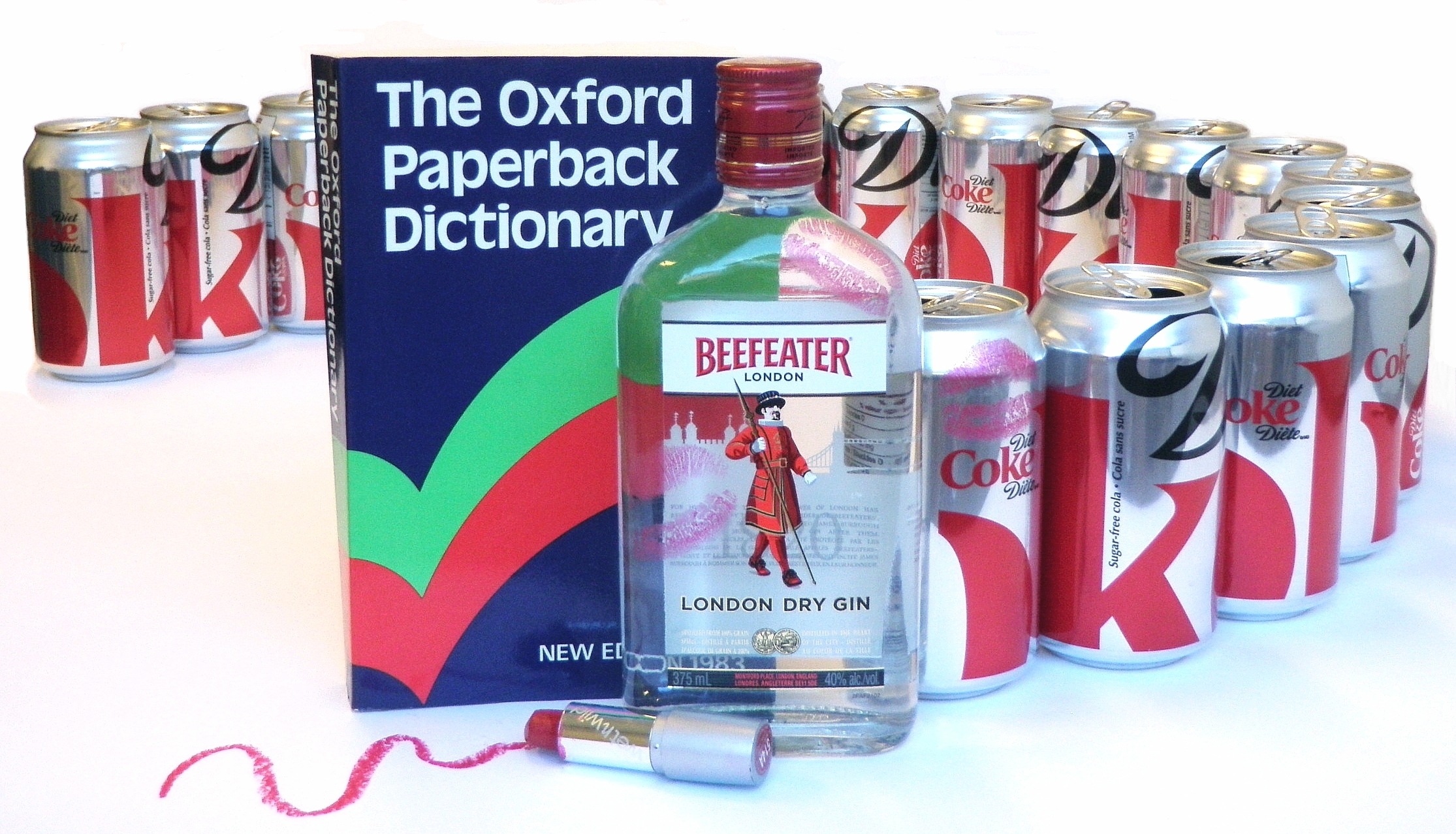
addictionThe language we choose to use has incredible influence over our perception of reality. Every word is linked into an ever evolving neural network of associations, concepts, and emotions. Meaning is culled from these maps, which are culturally driven yet far more flexible than one might think. Addiction, habit, compulsion, rock bottom – these are dangerous, helpless words. There’s no way out of ‘compulsion’, and ‘rock bottom’ is a bleak, cold, lonely place. The idea that we have to reach it, the bottom of the well, before we regain our right to the word ‘choice’ means that we are forced to do real social and physical damage before admitting defeat and winning control. Brain chemistry is the author of these words. They feel so right, so real. That’s why we use them. Withhold satisfaction from an addict and their brain spirals into an unbearable chemical panic. This panic dictates its intentions to our prefrontal cortex, as to a willing, eminently obedient 1950s secretary. Our impatient limbic boss says, “You know what I want to say, Honey. Just put it into your own words and send it off.” Our words. Our choice. Glamours These are the things that make make life worth living. We ‘get off’ on them. Take them away and life dims to survival. We are genetically and culturally predisposed to our glamours: in how we are coded to metabolize nicotine, or the density of our D2 dopamine receptors, or what Disney taught us about love. These glamours, some innocent, even healthy, and some decidedly not, are then triggered by personal experience, be it the red lipstick of our favourite movie star or first hit of cocaine. Humanity needs its glamours. Biologically, desire drives our movement through time. Without it we, quite literally, will cease to breathe. Even the most hard-core guru will agree. Beyond our base appetites, our glamours are our sparkle and armor against the inevitability of suffering and death. But sometimes a glamour will slip past our conscious control to become… Insatiables Birth is not moderate. Death is not moderate. Life, therefore, is not a moderate act. By their very natures some of our glamours can biologically begin to stretch our appetites out of proportion, especially when we use them to cope with an immoderate world. Our dopamine baseline and receptor density can change. With food, the hormone leptin can throw things out of wack. Anything can become a pathological obsession: Diet Coke, cats, clutter, gin, sex, reality TV… anything. An insatiable is something we can’t get enough of and its pleasures begin to overshadow all others. We make choices that always somehow circle back to satisfy our cravings. Romantic love is an insatiable, but while it chemically evolves, some insatiables risk becoming… Be-all-end-alls This is the end-game. When an insatiable becomes a be-all-end-all, we live our life in service to its mastery. Nothing else matters. Take it away and life looses its last hint of luster. It is our all, and by its exclusion of all else, without intervention, will end all. Our brain wants only this, all the time, whatever the cost. It is the only appetite worth satisfying. Chemically, it owns our motivations and our reasoning. But it is not rock bottom. It is an honest moment with our soul, an acknowledgment of circumstances. It is the moment of choice – our destruction or the originating glamour’s destruction? One must end. Changing our language opens up a new neural network of more empowering associations, concepts, and emotions. And by doing so, it also opens up new paths of treatment. Choosing the right variables/symbols is always the first step towards balancing an equation. I promised my Blank Canvas Living Creative counselling client, who was brave enough to strip off her muumuu and reveal her insatiables, that I would show her a different path and guide her through change. Come join us on the journey. This is a Story Thread post – Click to read more…

Whatever you are doing at this exact moment is exactly what you want to be doing

office cartoonI know you don’t believe me, especially if you’re tied to a computer when it’s a cartoon beautiful day outside or you’re just about to do the dishes. But think about it. Your brain is an incredibly efficient piece of equipment. Its network of neural linkages is structured according to genetics and interwoven according to experience. You think you have to go to work. You think you have to do the dishes. But if you didn’t want to, you wouldn’t do it. Plain and simple.

Our rational mind, our prefrontal cortex, is essentially in service to our limbic system. This reptilian, emotional center is the influencing force on the parameters of our logic and ensuing rational arguments. Brain scans show that a decision can be predicted up to 7 full seconds before our conscious minds become aware of the outcome. Consciousness is the gatekeeper, and final reasoning checkpoint before we act. Self is the entire system acting together.

Your alarm goes off… “Oh gawd I don’t want to go to work!” So why do you get up? You want to maintain and support your social relationships. You want to get your paycheck so you can keep your house and enjoy the security and pride of ownership. You want to keep your car so you have the freedom of travel and mobility (I happen to be a renter who takes the bus… sigh, but the same theory holds).

Addiction and trauma can skew the system, and if you find yourself saying “I don’t want to be doing this but I can’t stop,” what you can do is stop kidding yourself. If your dopamine/reward system is getting-off on a behaviour, well, that’s the very definition of ‘want’. OCD is another example. If your limbic fear control is overreacting, it will, ever so desperately, ‘want’ relief. Own that want. I know the word gets a bad rap in our culture, but there should be no shame in admitting the truth when it can give you the power you need to start making real changes in your life.

Admitting that your adopted value system and priority scale dictate your decisions, and not some external taskmaster forcing you to keep plodding away on some determinist treadmill, will help put your world back into your hands. Changing the language that traps us in our logic loops is the first step in the challenging process of changing those worlds.